Thompson Chevrolet - Patterson, CA

Blog / Chevrolet Dealer Patterson, CA

Best 3-Row Chevy SUV for You: Equinox vs. Traverse vs. Tahoe

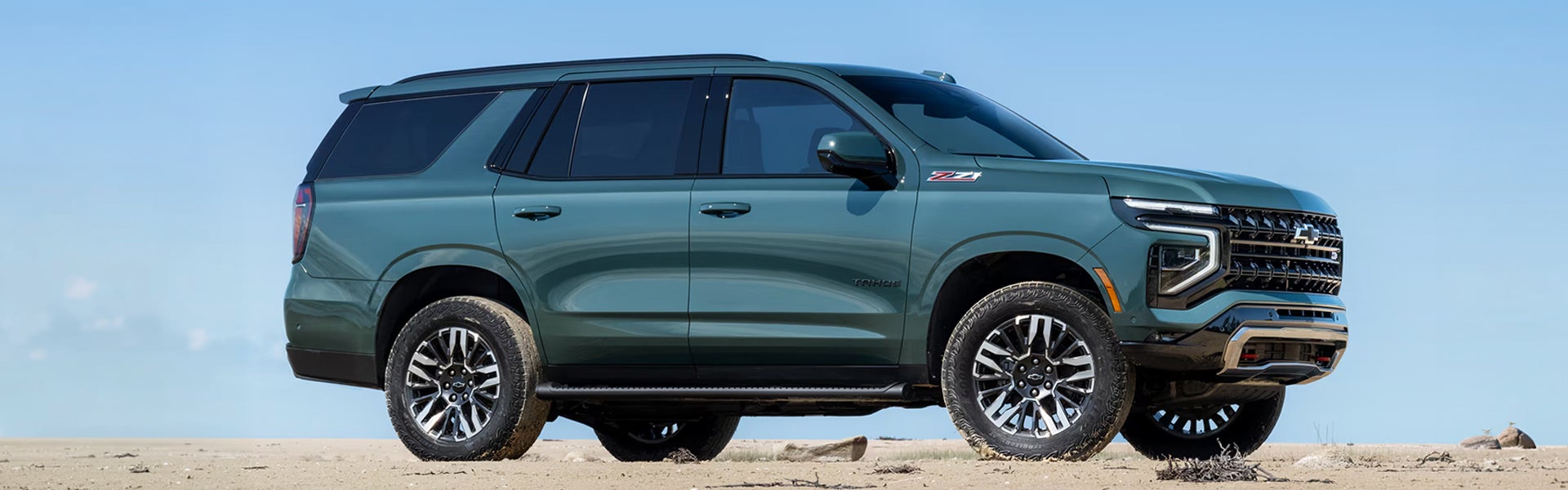
Chevrolet Tahoe Z71 on sandy terrain.
If you’re shopping for a family-friendly 3-row Chevy SUV near Patterson, California, Chevrolet gives you some genuinely strong options to consider. The Equinox, Traverse, and Tahoe each bring something different to the table, and choosing the right one really comes down to how your family lives and what you need from your vehicle every day. Let's break them down so you can make a confident, informed decision.

Chevy Equinox: The Smart, Efficient Choice


We know, it’s a 2-row SUV, but the 2027 Chevy Equinox is a great starting point for families who want a comfortable, capable SUV without going oversized. If you have more than 5 family members that you usually travel with, you can skip the Equinox, but if not, you’ll find what this SUV lacks in seating capacity it more than makes up for in smart design, technology, safety features, and everyday comfort. The 2026 Equinox was named America’s Most Dependable Compact SUV by JD Power, and has the robust safety suite of over 15 standard driver-assistance features to back it up. With fuel economy at up to 27 MPG combined, nearly 40” of 2nd-row legroom, and almost 30 cu. ft. of cargo space even when you’re traveling with a full house, it’s an incredibly practical SUV. Fold the rear seats down to open up 63.5 cu. ft. of cargo space.  

In comparison to the larger Traverse, the Equinox makes the most sense for smaller families or those who prioritize easier parking and better fuel efficiency over maximum passenger capacity.

The Equinox also comes in an all-electric version—the Equinox EV—which is worth exploring if you make frequent short trips and just want to eliminate trips to the pump. If your family doesn’t regularly need to seat 6 or 7 passengers, the Equinox is a practical and well-rounded pick.

Chevy Traverse: The 3-Row Family Favorite


The 2027 Chevrolet Traverse steps things up considerably for growing families who need that extra row of seating. This is where the 3-row Chevy SUV conversation really heats up, because the Traverse delivers the perfect amount of passenger room and cargo flexibility for a lot of busy families.

With seating for up to 8 people 41.5” of 2nd-row legroom, and about 58 cu. ft. of cargo space with just the 3rd row folded, the Traverse handles time-staggered school runs for the entire family, road trips, sports gear, big grocery runs, and weekend adventures with ease. The Best-in-Class maximum of 98 cu. ft. of cargo space gives you versatility to even pack in a surfboard or a dorm room’s worth of furniture. When you stack up the Equinox vs. Traverse debate, the Traverse wins clearly on interior space and versatility. It’s a strong middle-ground choice—big enough to handle the whole crew, but still approachable in size and easier to maneuver than a full-size SUV.

Chevrolet Tahoe: Full-Size Power for Bigger Needs


The 2026 Chevy Tahoe is the choice for families who need maximum space, serious towing capability, and want a commanding presence on the road. This full-size 3-row Chevy SUV gives you a roomier 3rd row than the Traverse, actually fitting adults comfortably with about 35” of legroom. That’s a serious difference for teenagers, carpooling, and long road trips. Cargo capacity grows too, giving you 25.5 cu. ft. behind the 3rd row, 72.5 cu. ft. with the 2nd row folded flat, and a max of 122.7 cu. ft.  

The Tahoe is also a strong pick if you regularly tow a trailer, camper, or boat as well, offering an 8,400-lb. towing capacity and a diesel engine for the best fuel efficiency and durability. It’s a bigger investment, but for large families or those with demanding needs, the capability and premium feel are hard to overlook. If space and power are your top priorities, the Tahoe delivers on both counts.

Which Chevy SUV Is Right for Your Family?


The best choice really depends on what your day-to-day looks like. For smaller families focused on efficiency and value, the Equinox is a smart, capable option. If you need 3 rows and everyday versatility, the Traverse is hard to beat for the money. And if you want maximum room, towing strength, and a full-size experience, the Tahoe is built for that job.

Visit Thompson Chevrolet Today


If you are ready to find your next 3-row Chevy SUV near Patterson, CA, the team at Thompson Chevrolet is here to help you explore your options and find the right fit for your family. Browse the full lineup online and get started.
Posted in:

Related Posts

Car dealership salesperson discussing a vehicle with customers.

Chevrolet Warranty Explained: What New Owners Should Know About Coverage and Service

A new Chevrolet represents a considerable investment in engineering, manufacturing, and technology. Its warranty is part of that investment, establishing which mechanical and electrical failures the manufacturer will address during a defined period. Yet warranty coverage is often misunderstood, particularly when it comes to maintenance obligations and exclusions. For owners seeking Chevy warranty service near Patterson, CA, understanding those distinctions can prevent unnecessary expense and confusion. Understanding Chevrolet's Warranty Structure Chevrolet's new-vehicle warranty consists of several separate protections, each addressing different components and operating conditions. The Bumper-to-Bumper Limited Warranty generally covers qualifying defects in materials or workmanship for 3 years or 36,000 miles, whichever occurs first. It encompasses numerous electrical, climate-control, interior, and exterior components, subject to specific exclusions. The Powertrain Limited Warranty extends protection to 5 years or 60,000 miles for covered engine, transmission, and drivetrain components. These assemblies contain some of the vehicle's most mechanically demanding systems, making this additional coverage significant. Chevrolet also provides roadside assistance, corrosion protection, and federally mandated emissions warranties. Coverage periods vary by program and component, with certain emissions-related parts protected for up to 8 years or 80,000 miles. Why Warranty Coverage Has Limits A manufacturer's warranty protects against qualifying defects; it isn't a comprehensive maintenance agreement. Engine oil, filters, tire rotations, and brake servicing are generally routine ownership expenses. Components such as brake pads and windshield wiper blades also experience normal wear and aren't ordinarily covered simply because they require replacement. Accident damage, improper operation, and failures caused by unsuitable modifications may fall outside warranty protection. The distinction is important: a component failing because of defective manufacture presents a different situation from one damaged through external causes. Service technicians must establish the nature of a failure before determining eligibility. That diagnostic process is an essential part of responsible warranty administration. Maintenance and Your Warranty Rights Regular maintenance protects the vehicle's mechanical condition and helps establish whether a failure resulted from a defect or inadequate care. Follow the service intervals and specifications in your Chevrolet owner's manual, including the correct fluids and replacement parts. Retain invoices and maintenance records, particularly when servicing the vehicle outside a dealership. Importantly, routine maintenance doesn't have to be performed exclusively at our Chevrolet dealership to preserve factory warranty coverage. Nor does installing an aftermarket component automatically invalidate the entire warranty. However, a manufacturer may deny coverage for a failure caused by improper maintenance or an unsuitable part. Warranty repairs themselves are generally handled through authorized Chevrolet service facilities, where technicians can follow GM diagnostic procedures and process eligible claims. What Happens During a Warranty Service Visit? When a potential warranty concern arises, accurate diagnosis comes first. A technician examines the reported symptoms, checks relevant electronic fault information, and evaluates the affected system. Modern Chevrolets contain interconnected mechanical and electronic controls, so a warning light doesn't always identify the failed component directly. Establishing the underlying cause helps ensure that the correct repair is performed. If the fault qualifies for warranty coverage, the authorized service department can complete the applicable repair using approved procedures and parts. Owners should confirm coverage and any potential diagnostic charges before authorizing work. Why Documentation Deserves Attention Good maintenance records provide a history of the vehicle's condition and servicing. They can establish when fluids were replaced, inspections completed, and developing concerns first reported. It's also worth reviewing the warranty booklet supplied with your specific Chevrolet. Coverage can differ according to model, powertrain, model year, and warranty program. The written terms remain the definitive reference for eligibility. Schedule Chevrolet Warranty Service at Thompson Chevrolet Understanding Chevrolet's warranty means knowing both the protection provided and the responsibilities that accompany ownership. Thompson Chevrolet in Patterson, CA, can help identify eligible repairs and explain the applicable warranty terms. Contact the dealership or schedule a service appointment online to have Chevrolet-trained technicians look at your vehicle's concerns professionally.

Mechanic inspecting a vehicle undercarriage.

Chevy Fall Maintenance: Preparing for Central Valley's Cooler Roads

California's Central Valley doesn't experience the sort of winter that demands snow chains and heroic tales of survival. Yet that doesn't make seasonal maintenance unnecessary. Around Patterson, CA, autumn brings cooler mornings, fog, and eventually rain, all of which expose weaknesses that summer driving can conceal. Preparing your Chevrolet isn't particularly complicated, but knowing which components deserve attention can make a considerable difference. Why Autumn Deserves a Mechanical Checkup Summer heat takes a toll on vehicles, especially those regularly exposed to high temperatures and long journeys. Batteries deteriorate, rubber components age, and tires experience considerable thermal stress. When temperatures begin falling, these accumulated effects can become apparent. A seasonal inspection provides an opportunity to identify developing problems before they become expensive repairs. The objective isn't to replace perfectly serviceable components. It's to establish their condition and address anything approaching the end of its working life. Battery Health: More Than a Voltage Reading A battery can appear perfectly healthy during warm weather yet struggle when temperatures drop. Summer heat accelerates internal deterioration, while cooler conditions reduce available starting performance. Have the battery tested for its ability to deliver current under load, not simply its resting voltage. Corroded terminals, loose connections, and damaged cables also deserve inspection. Modern Chevrolets rely heavily on electrical systems for everything from engine management to connected services, making a dependable battery especially important. Tires and Brakes: Where Safety Begins Tires deserve particular scrutiny because they're responsible for transmitting every steering, braking, and acceleration input to the road. Pressure typically decreases by approximately 1 psi for every 10-degree Fahrenheit temperature drop. Check pressures when the tires are cold, using the manufacturer's recommended figures on the driver's door-jamb label. Tread depth is equally important. Worn tires struggle to evacuate standing water, increasing the possibility of hydroplaning. Uneven wear may indicate alignment or suspension problems. Brakes should also be inspected for pad wear, rotor condition, and hydraulic integrity. Grinding noises, unusual pedal behavior, or deteriorating stopping performance warrant immediate attention. Fluids, Cooling, and Clear Visibility Engine coolant isn't exclusively a summer concern. Its condition and concentration influence corrosion protection and temperature regulation throughout the year. Check coolant, brake fluid, windshield washer fluid, and any applicable power steering fluid according to Chevrolet's maintenance recommendations. Windshield wipers are another inexpensive component with an important job. Months of exposure to sunlight can harden their rubber edges, leaving streaks precisely when visibility deteriorates. Replace blades that chatter, skip, or smear. Foggy mornings also make properly functioning headlights, taillights, and window defogging equipment essential. Look Beyond the Obvious A comprehensive inspection should extend to belts, hoses, suspension components, and signs of fluid leakage. A thermostat beginning to malfunction or a hose showing early deterioration may produce few noticeable symptoms during ordinary driving. Identifying such problems early is generally less disruptive than discovering them during a journey. Technicians can also review maintenance intervals and determine which services are due based on mileage and operating conditions. Schedule Chevrolet Service at Thompson Chevrolet Central Valley winters may be mild by national standards, but wet pavement, reduced visibility, and changing temperatures still demand a properly maintained vehicle. A careful inspection now can help your Chevrolet remain dependable through the season. Visit Thompson Chevrolet in Patterson, CA, for professional maintenance and vehicle inspections. Schedule a service appointment online now to have your battery, tires, brakes, and other essential systems checked before cooler weather arrives.

Chevrolet Silverado pickup trucks in a mountain setting.

The Stronger 2027 Chevy Silverado Towing Guide: Which Silverado Engine Is Best for Towing?

The next-generation 2027 Chevy Silverado sees some serious upgrades in its already potent engine lineup—and that only amplifies its towing capacity. Whether you're hauling a boat through Patterson, California, a horse trailer, or a heavy work load, there's a powertrain built to match your needs—stronger than ever before. Here's a breakdown of what each engine offers so you can get the right amount of power for what you haul. The 2027 Silverado Engine Lineup at a Glance Before diving into which Silverado engine is best for towing your specific load, it helps to understand what's available. The 2027 Silverado offers 4 engines: the enhanced standard TurboMax™, the new 5.7L V8, the new 6.6L V8, and the class-exclusive Duramax® 3.0L Turbo-Diesel. All 4 come paired with a standard 10-speed automatic transmission. The Chevy Silverado’s towing capacity of course depends on the engine you choose—not necessarily the one you think—and goes all the way up to 13,700 lbs. The Enhanced TurboMax™ Engine: Best for Everyday Hauling The 2.7L TurboMax™ engine is a long-time favorite, with a history of producing class-leading power. For 2027, it’s been enhanced, now producing 350 hp and a Best-in-Class 455 lbs.-ft. of torque. This updated variant lets you tow up to 9,400 lbs. and offers a class-leading max payload of 2,340 lbs. This engine is a strong choice for drivers who occasionally tow smaller trailers but also want solid everyday fuel efficiency of 20 MPG combined and versatility. For drivers in Patterson, CA who need a well-rounded workhorse without stepping up to a full V8, the TurboMax™ delivers real capability in a smaller package. The New 5.7L V8: The Towing Champion The best Silverado engine for towing maximum loads is the all-new 5.7L V8. This engine produces 402 hp and 428 lbs.-ft. of torque. That results in a Best-in-Class maximum towing capacity of 13,700 lbs., making it the top choice for serious towers with heavy 5th-wheel trailers, large boat rigs, or substantial equipment haulers. It also offers a max payload of 2,170 lbs., giving you flexibility for both trailering and cargo use. If towing is your primary concern, this engine checks the most important boxes. The New 6.6L V8: Maximum Power on Demand The all-new 6.6L V8 is the most powerful engine in the Silverado lineup, producing 481 hp and 501 lbs.-ft. of torque. This doesn’t translate to higher towing capacity, as this engine is built for high-performance. The towing capacity comes in at 9,700 lbs. however, and the sheer raw muscle makes it ideal for drivers who want commanding performance and the ability to tow in demanding conditions or on steep grades. This engine is standard on the High Country and available on the ZR2, pairing power with premium amenities or off-road capability. Duramax® 3.0L Turbo-Diesel: Efficiency Meets Capability The Duramax® 3.0L Turbo-Diesel delivers 305 hp and 495 lbs.-ft. of low-end torque—enabling a solid 12,000 lbs. of max available towing. It's the class-exclusive diesel option and a smart pick for drivers who frequently tow long distances and want to balance capability with fuel efficiency. This engine lets you drive over 900 miles on a single tank. The diesel's strong torque output means confident towing without constantly pushing the engine hard, which can translate to a more relaxed experience on extended hauls. Which Engine Should You Choose? When weighing which Silverado engine is best for towing, start with what you're pulling and how often. The 5.7L V8 is the clear leader for maximum towing capacity. The Duramax® diesel suits long-haul towers who want torque and efficiency. The 6.6L V8 wins on raw power with the grunt to handle rough jobsites, and the TurboMax™ works well for lighter, everyday use. What is the maximum Chevy Silverado towing capacity? With the right configuration, it's 13,700 lbs.—and the 2027 Silverado is built to thrive on the challenge. Stop by Thompson Chevrolet in Patterson, CA, or visit to explore your options and find the right truck for the job.